![[ko'lon]](http://images.squarespace-cdn.com/content/v1/5eea78fb5485170b255200bd/c571aef5-8119-4dc5-b862-6a1fb5d02f12/Add+a+subheading+%281%29.png?format=1500w)
The Brooklyn Tuxedo
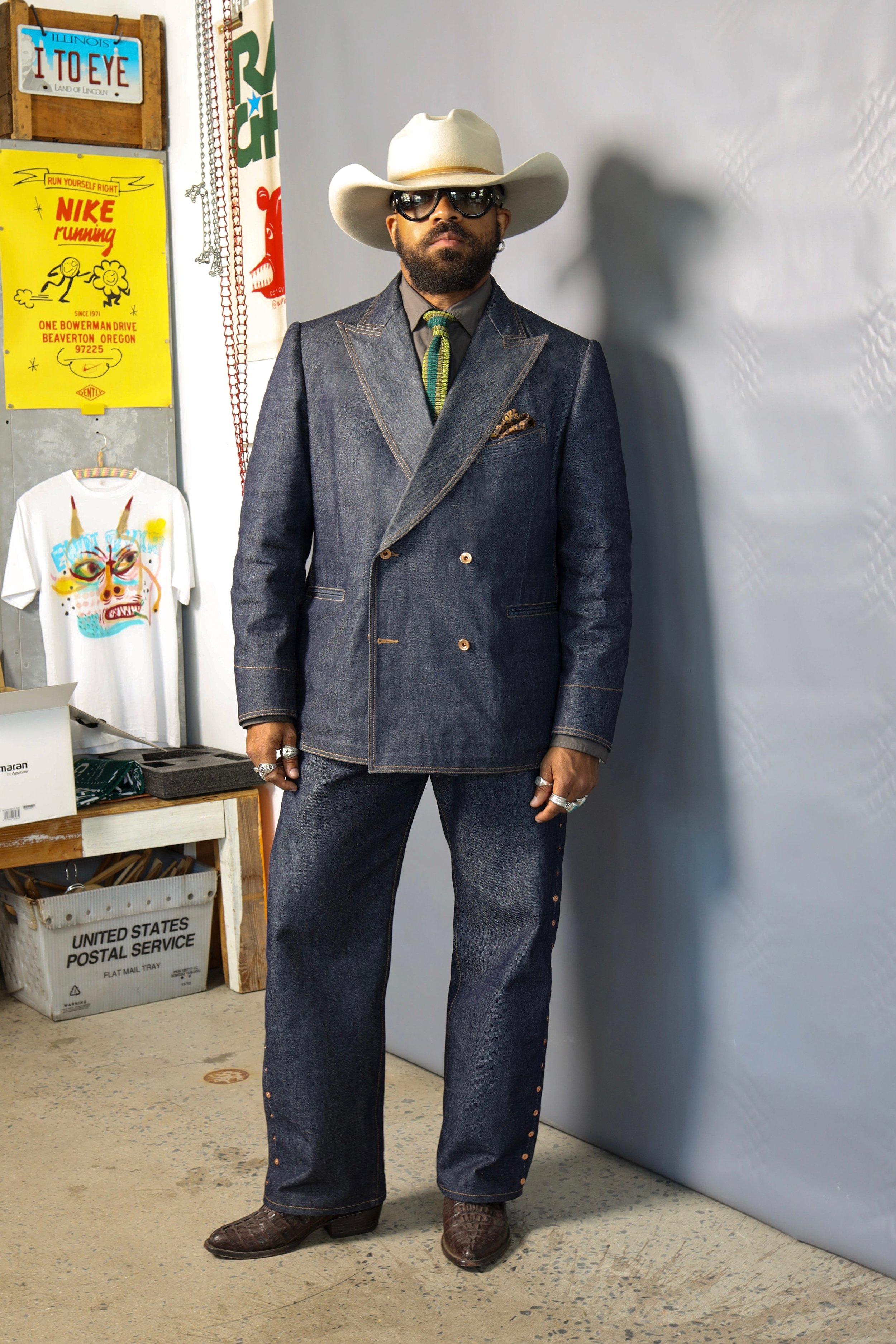
There are pieces that are made, and there are pieces that stay.
The story began with a single pair of jeans. Made in the atelier and worn consistently for a full year, they became a point of reference. The way the fabric softened, the way it held in certain areas and gave in others, began to form a kind of understanding between making and wearing.
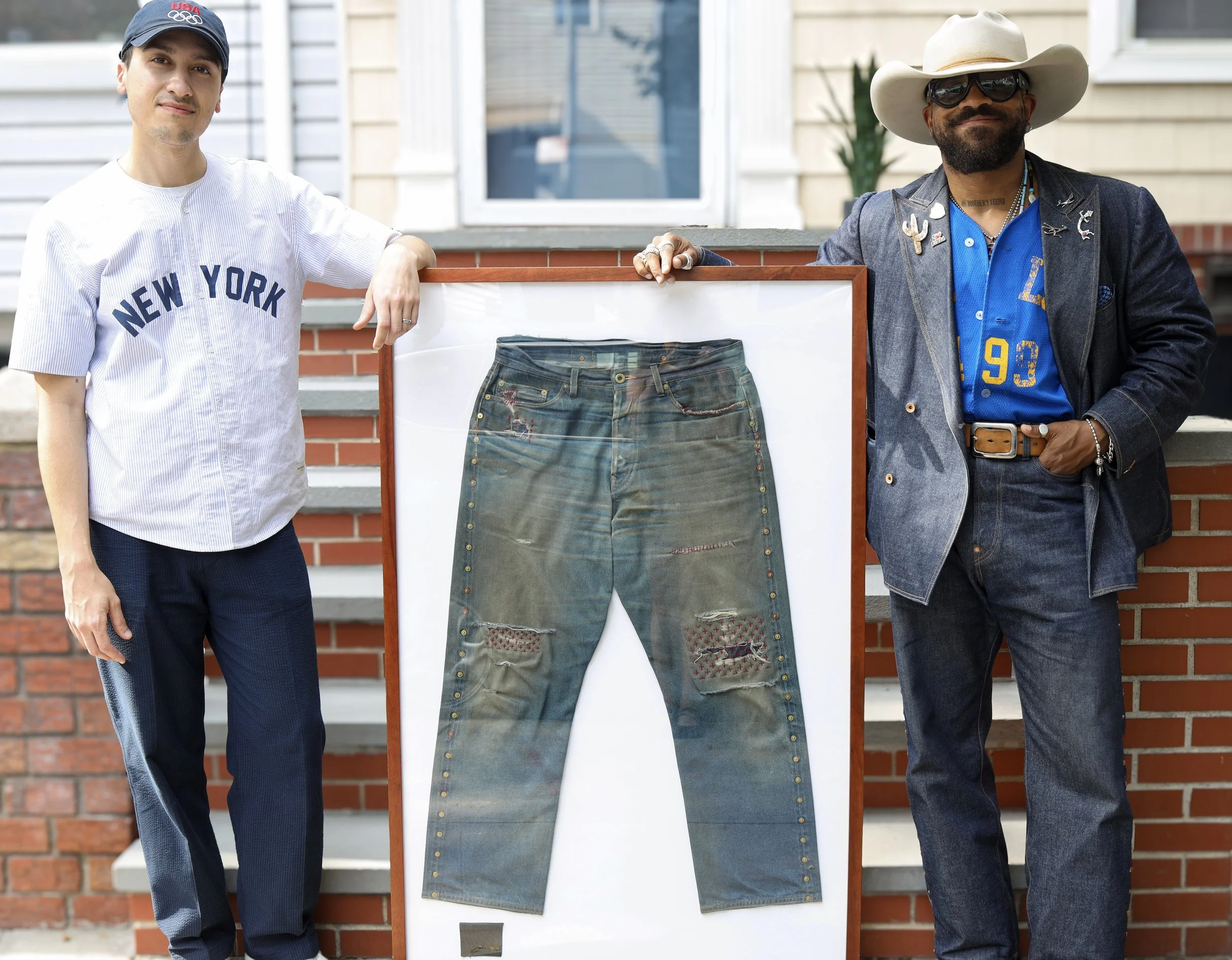
The first pair.
Made in the atelier and worn over time, then returned—carrying the marks of use. Framed, not as it was made, but as it became.
That understanding carried into the Brooklyn tuxedo.
What started as a shared appreciation for denim - Matthew, from the process of making and Hassan Boone, from years of working with garments in motion; shifted into something more continuous. For Hassan, denim was never just a fabric, but something followed closely—how it behaves, how it ages, how it becomes personal.
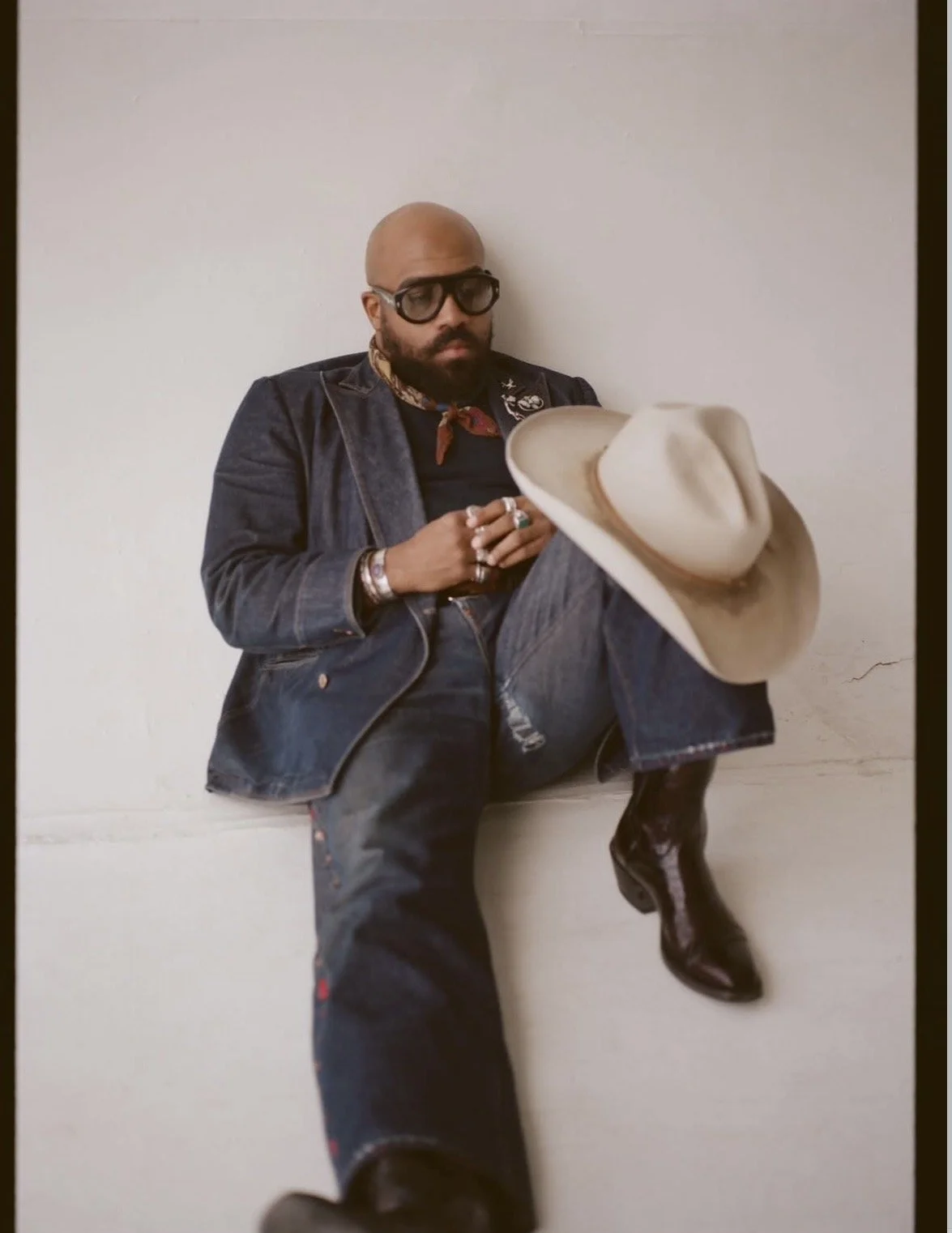
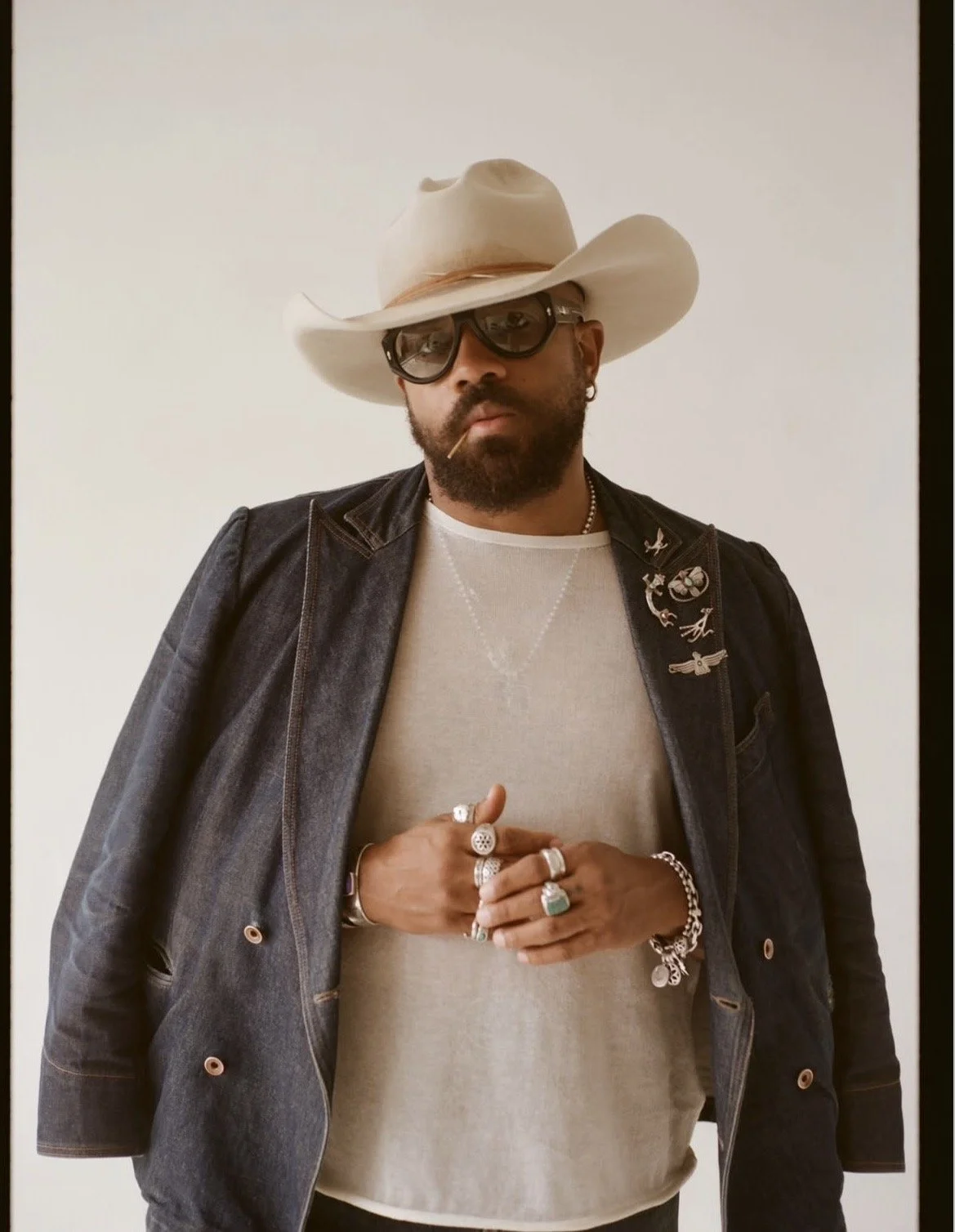
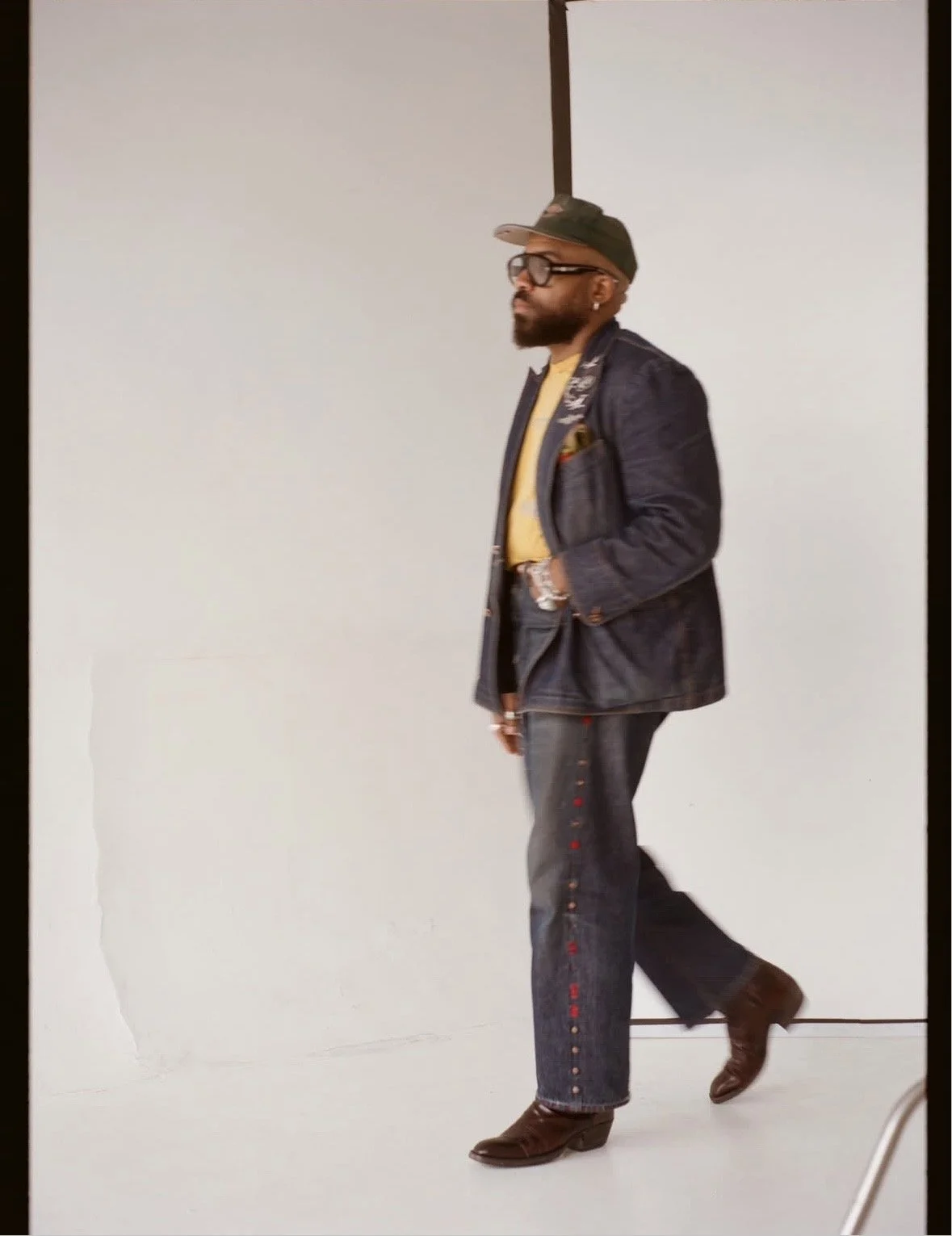
The tuxedo was developed from that place. Not as a departure, but as an extension of what had already been worn. Cut and constructed by hand in the atelier, it carried forward the proportions, the structure, and the sensibility of those earlier pieces.
Over the course of one year, the jacket and jeans moved beyond rotation and into daily use. With time, they began to change—softening, shaping, and holding the marks of wear rather than losing them.
They returned to the atelier more than once. Small repairs and reinforcements that followed use rather than replacing it. Each intervention becoming part of the garment itself.
What remains now is not the original piece, but a version formed through time. Creases set in, fabric shaped through movement, details accumulated rather than preserved.
At this point, the relationship extends beyond the garment. Through consistency, the Brooklyn tuxedo has become part of the brand’s language—not as representation, but through use. Something worn often enough to be understood.
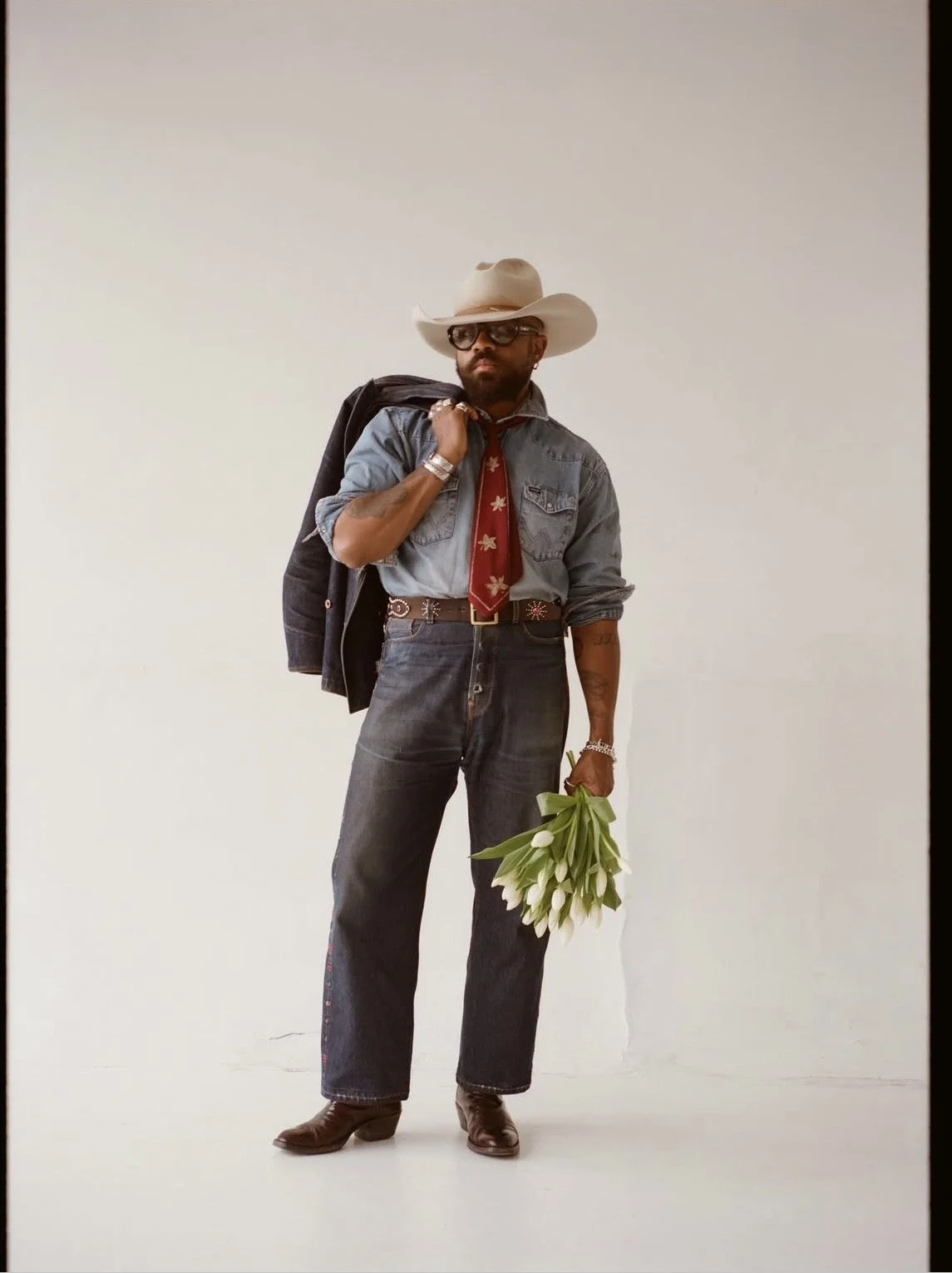
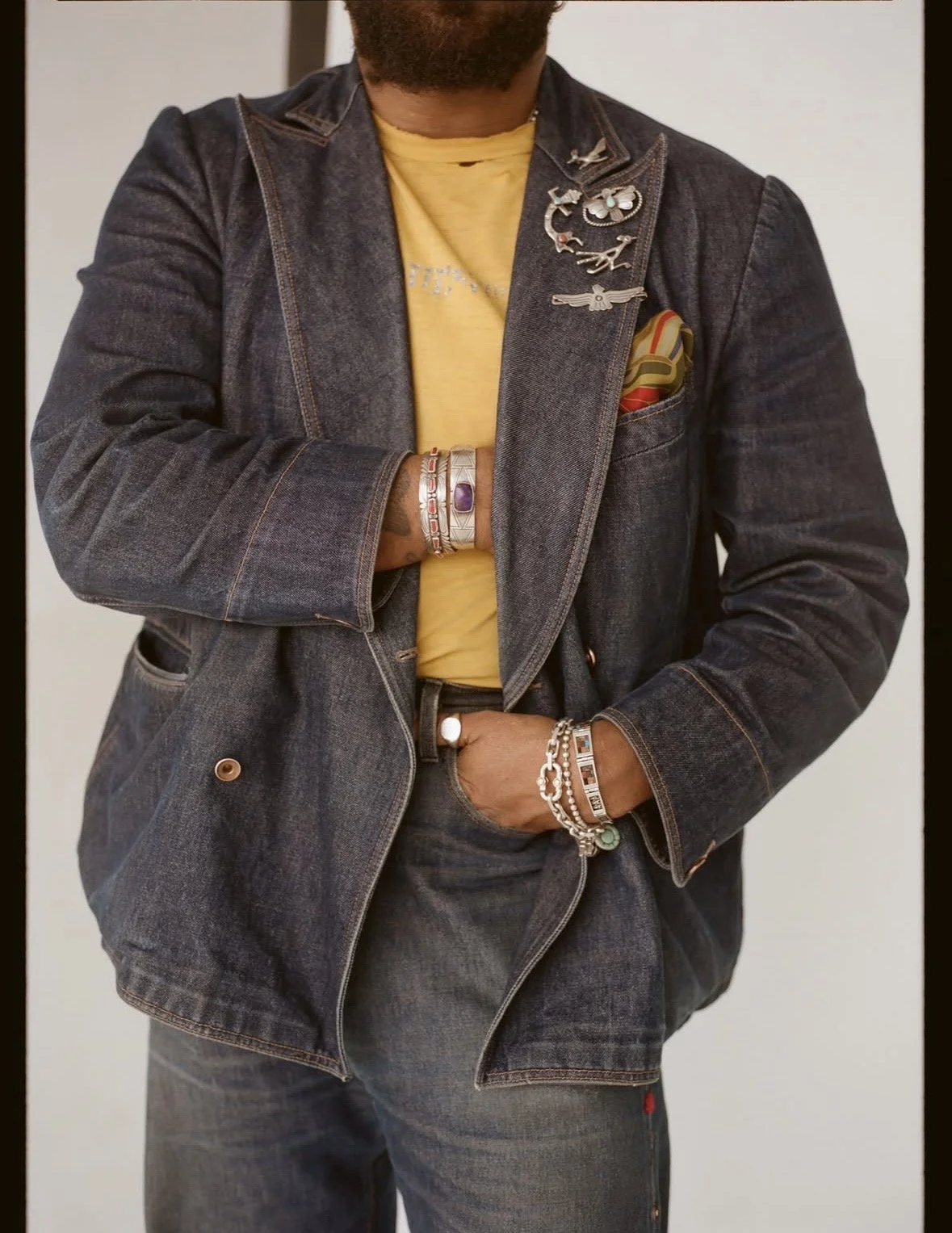
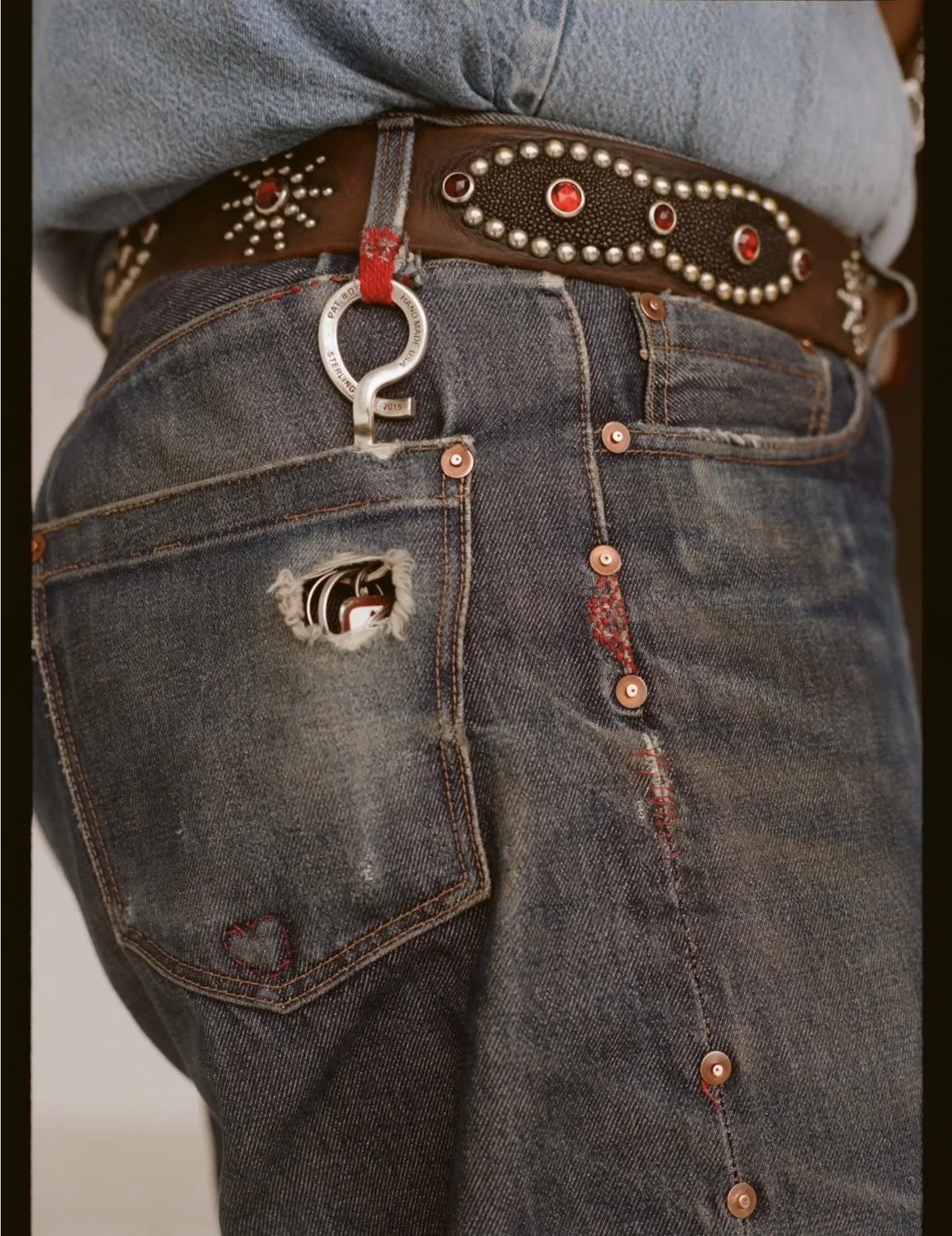
Over time, the indigo begins to break down unevenly.
Areas of friction—waist, pockets, seams—fade first, revealing a lighter tone beneath. The structure softens, and the surface develops contrast through repeated wear.
What remains is not a uniform color, but a record of use.