![[ko'lon]](http://images.squarespace-cdn.com/content/v1/5eea78fb5485170b255200bd/c571aef5-8119-4dc5-b862-6a1fb5d02f12/Add+a+subheading+%281%29.png?format=1500w)
From the Atelier to Cannes
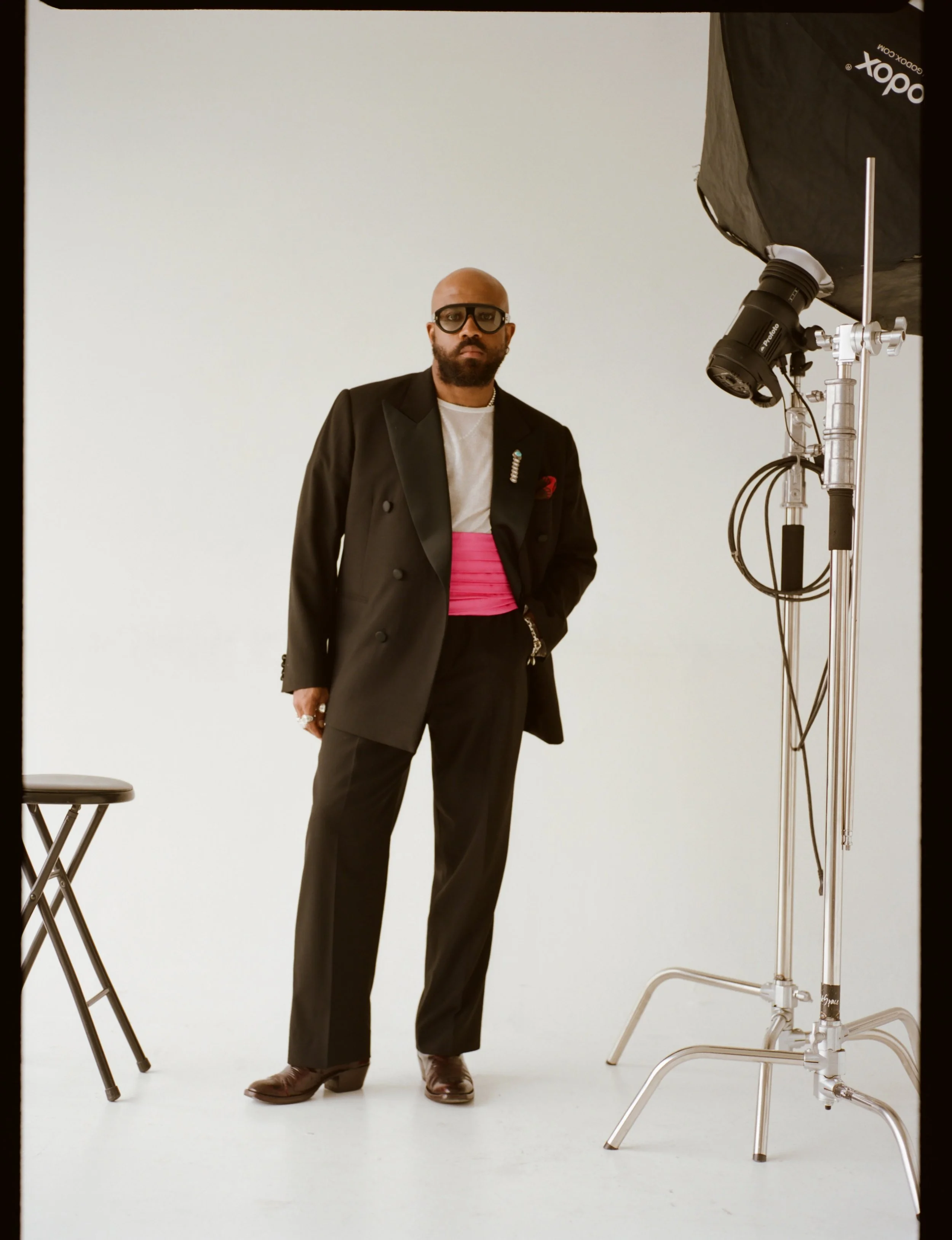
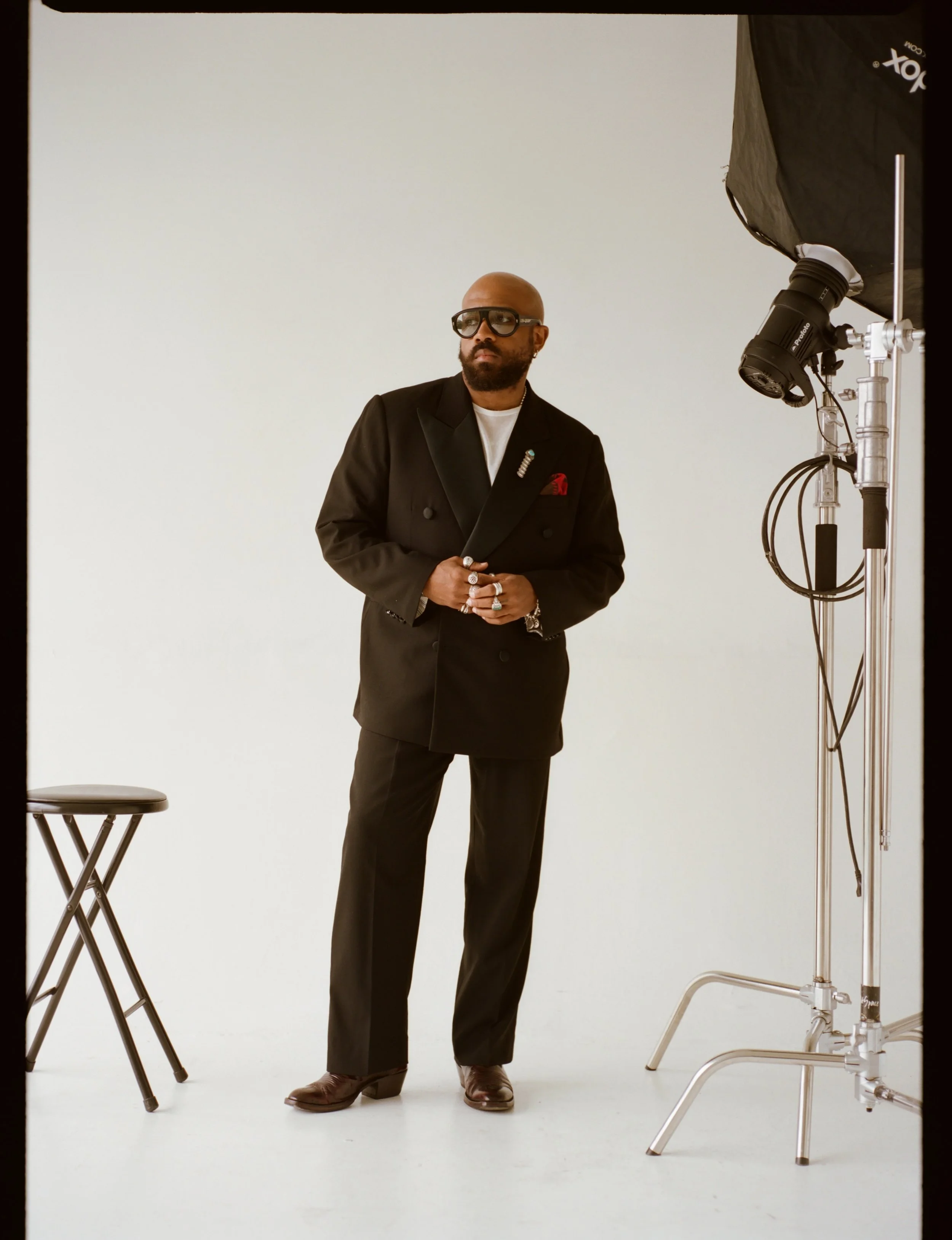
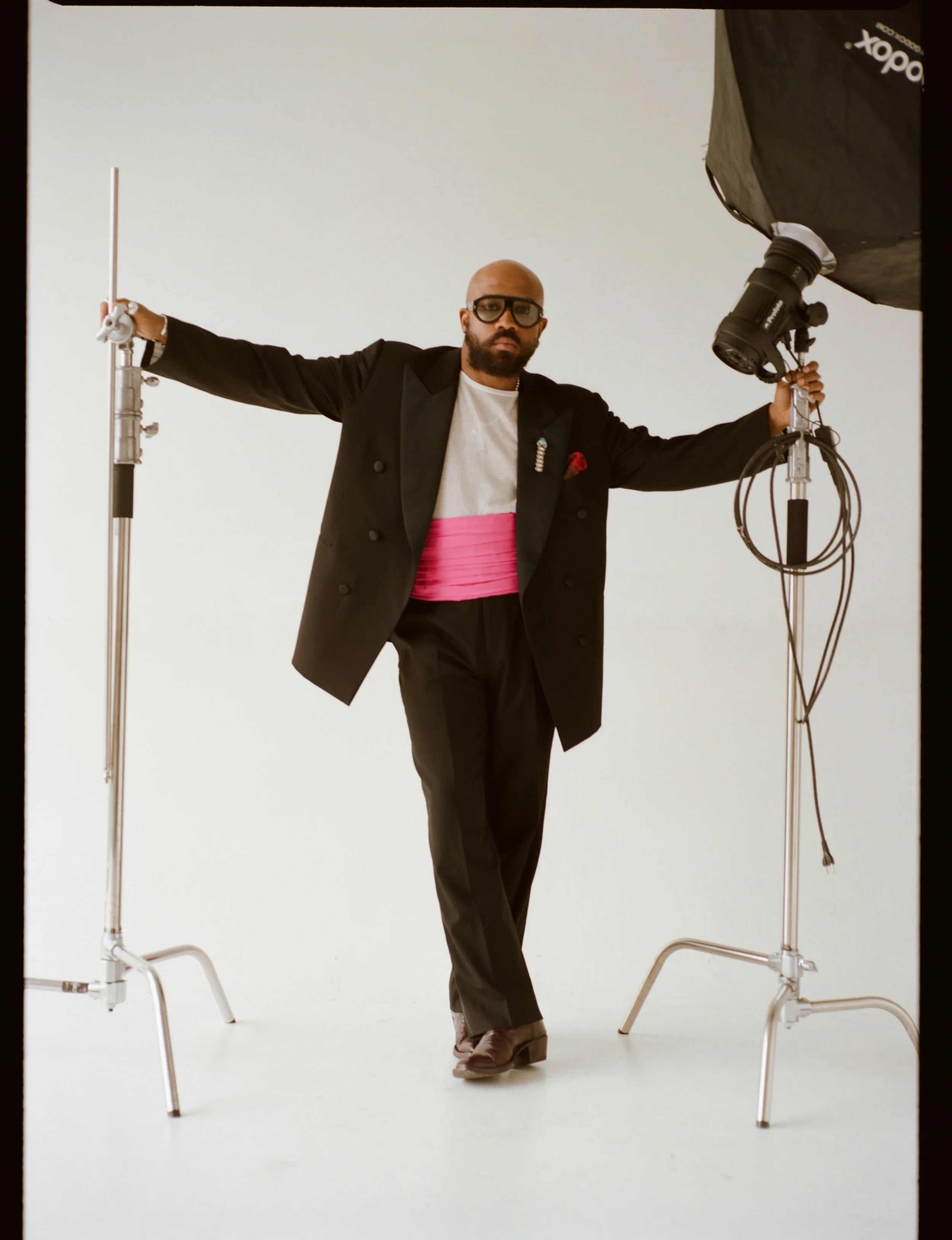
The project began with a reference already in use—a denim jacket and jeans worn daily over the course of a year. When Hassan Boone approached us, the aim was to retain that familiarity while shifting it into a more formal context. Rather than introducing something new, we worked from what was already established—studying fit, wear, and proportion. The tuxedo and trousers were developed as an extension of that foundation, constructed by hand in the atelier. This editorial documents the process from its early stages through to its final form, developed for Cannes Film Festival.
The final fitting took place in the [ko’lōn] atelier, where the garment is brought into its completed form.
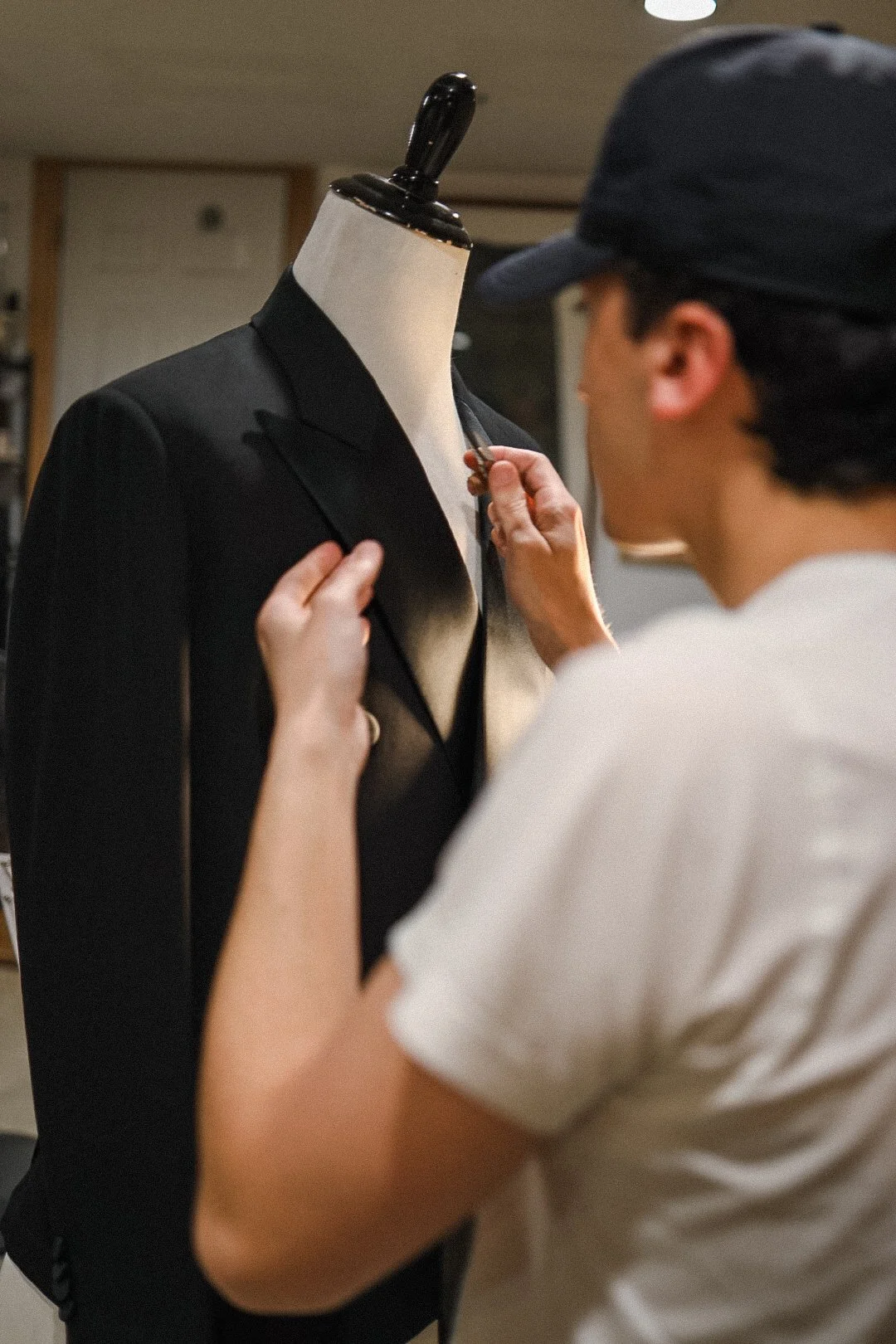
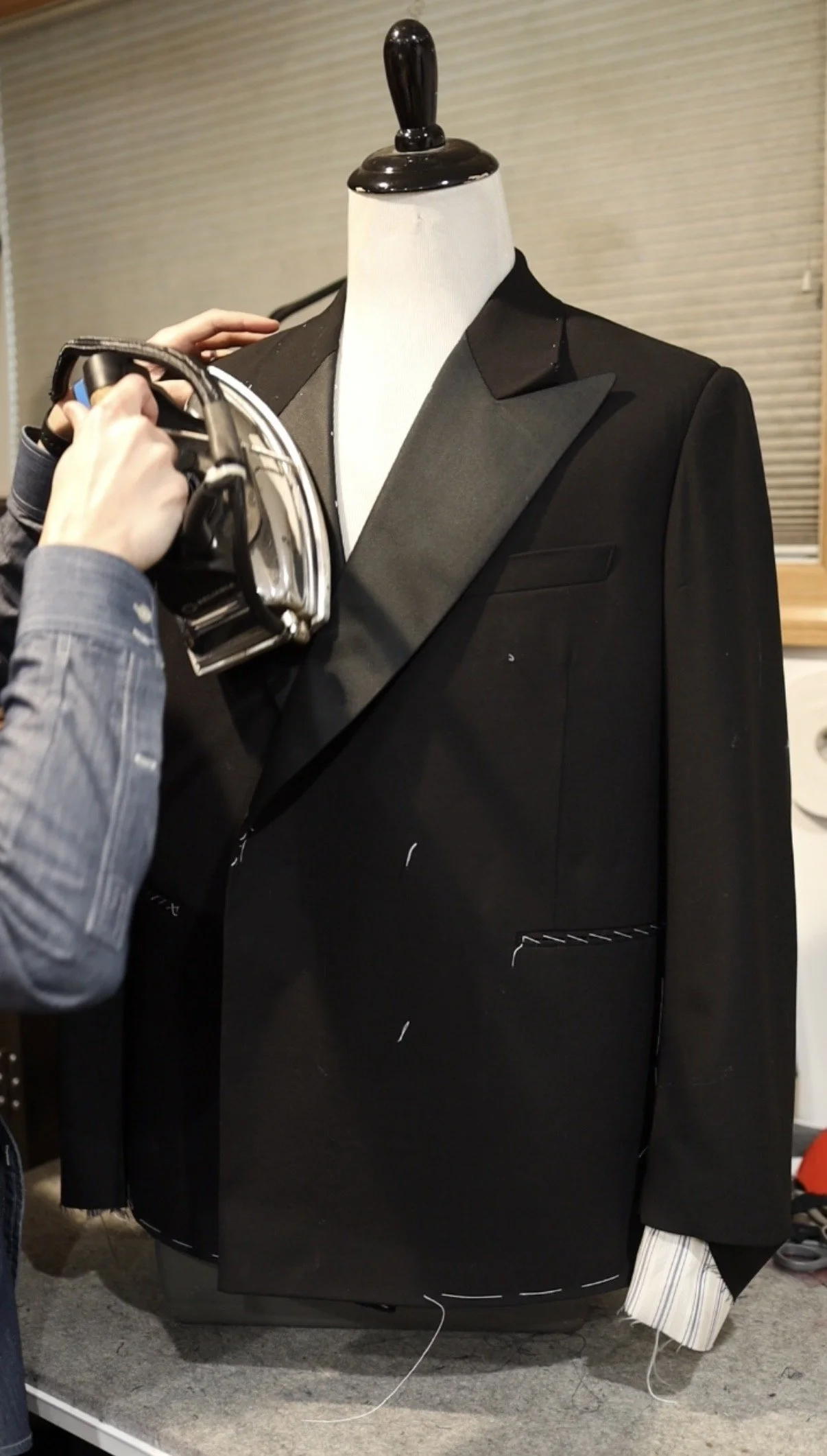
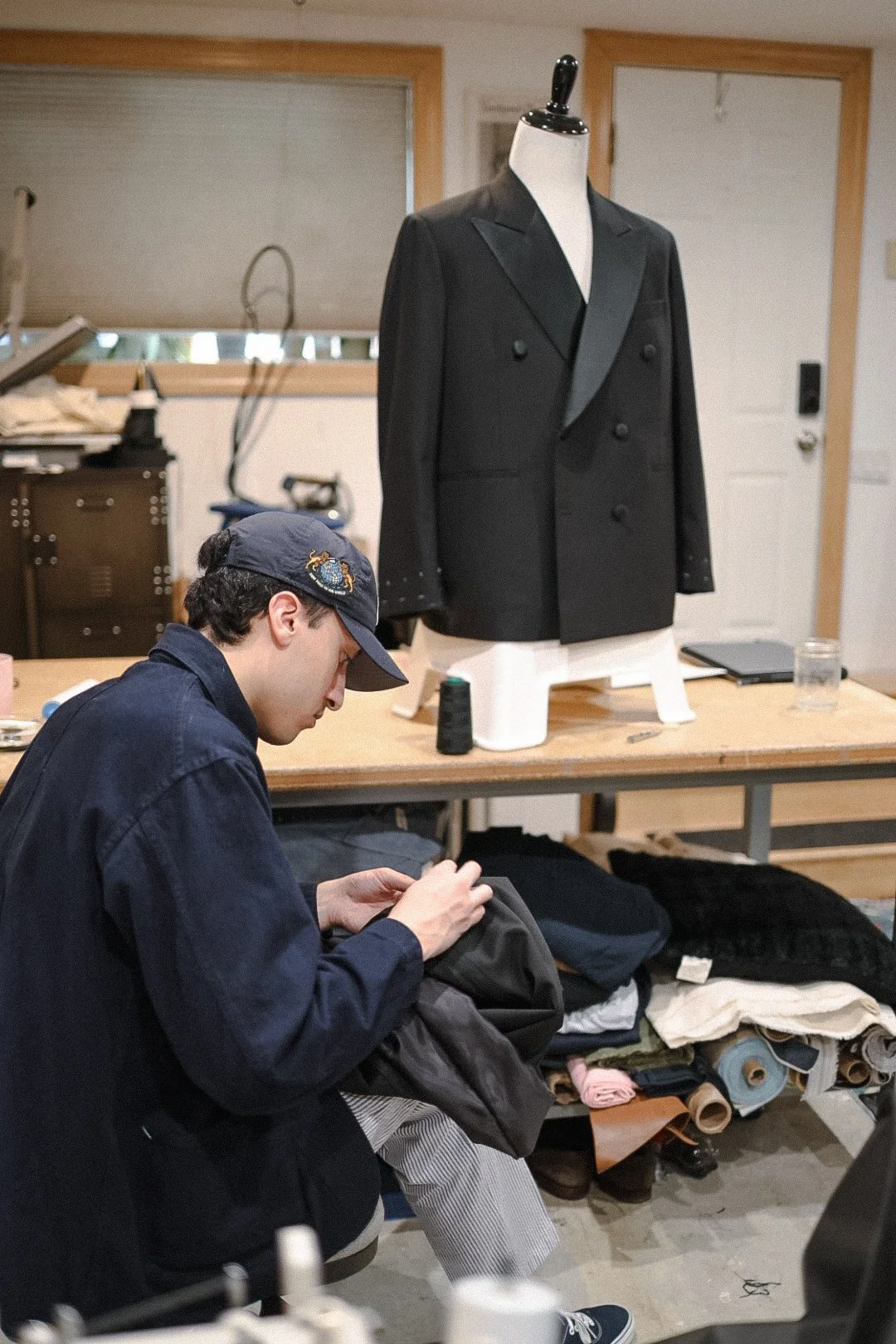
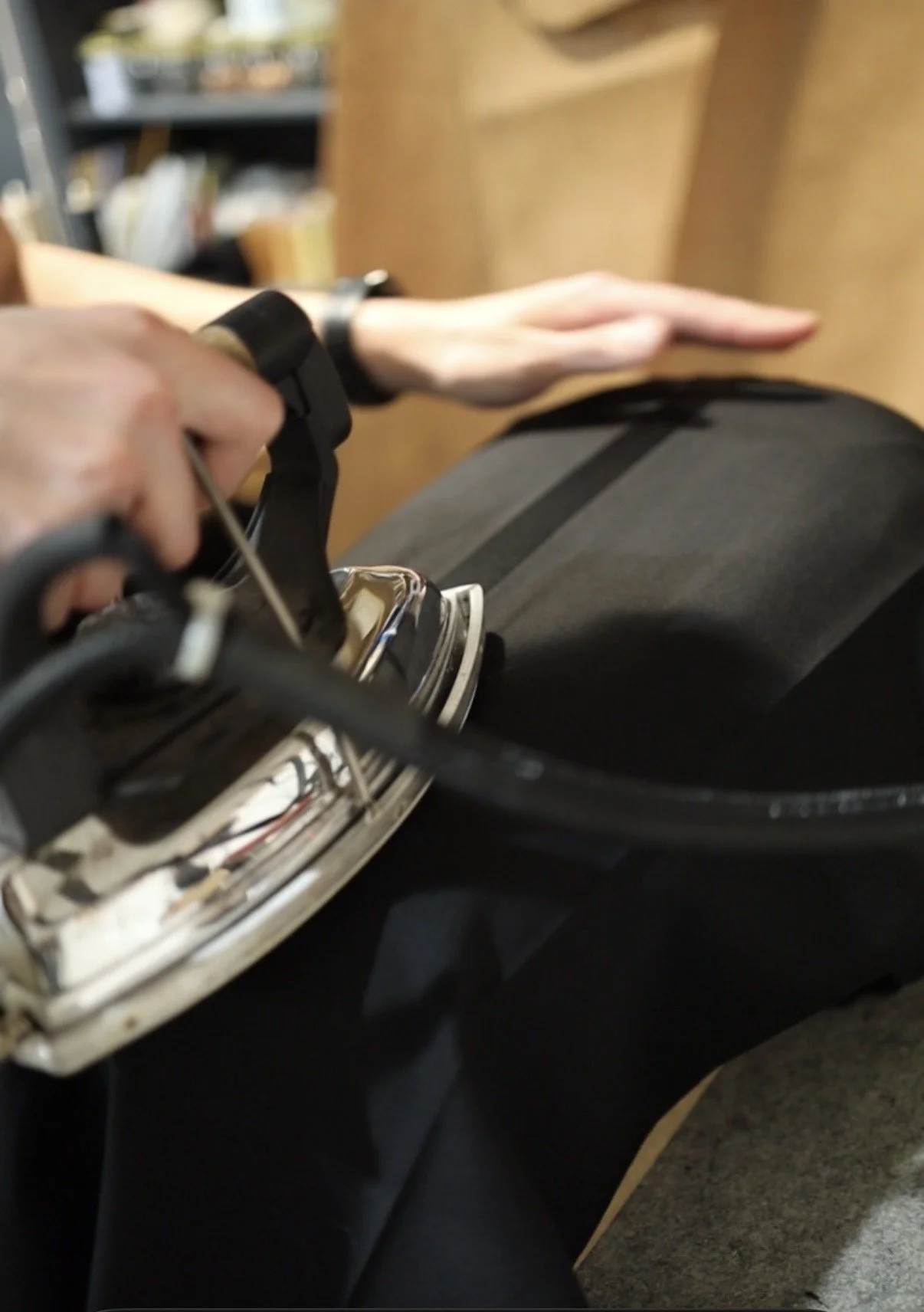
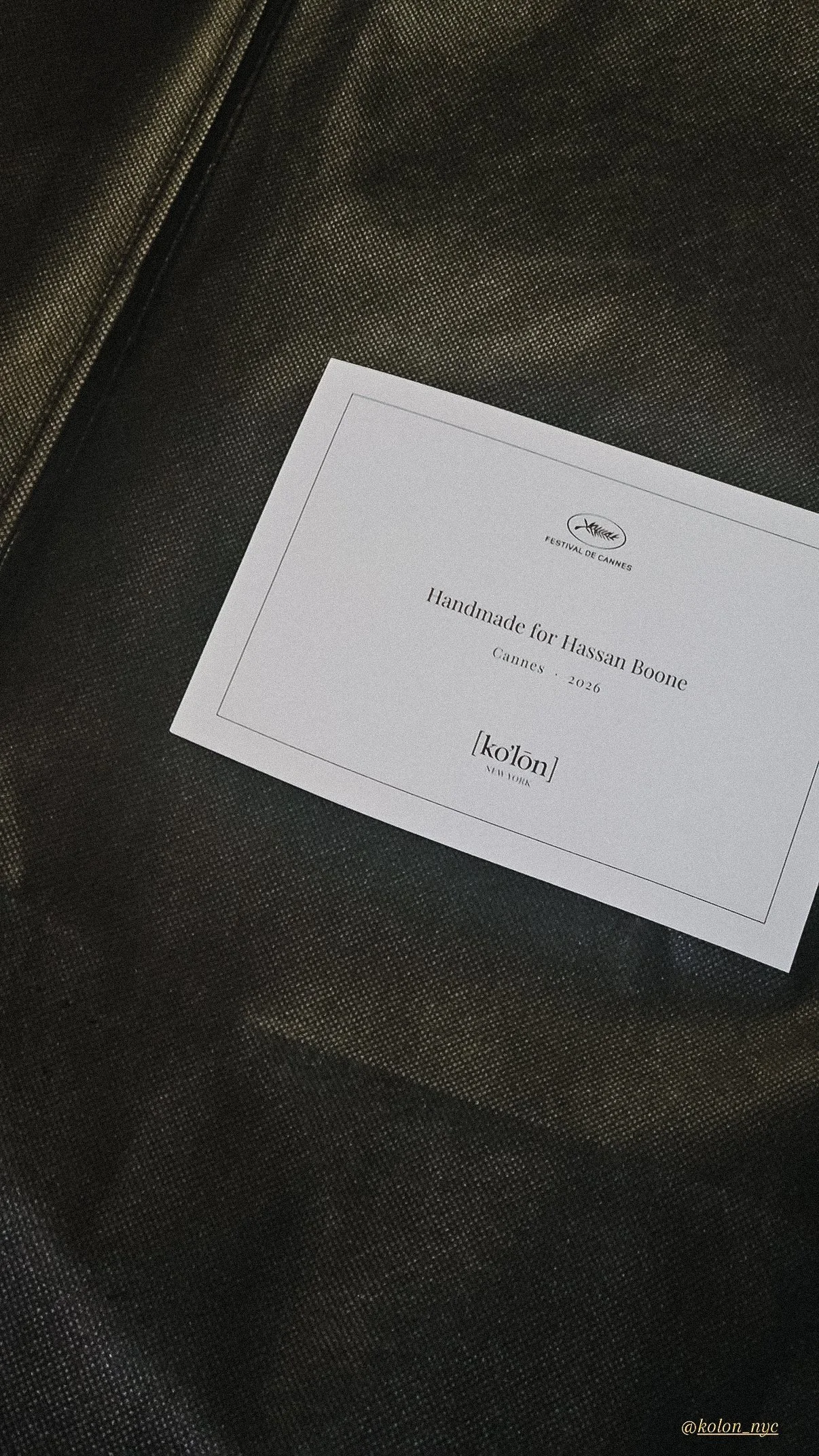
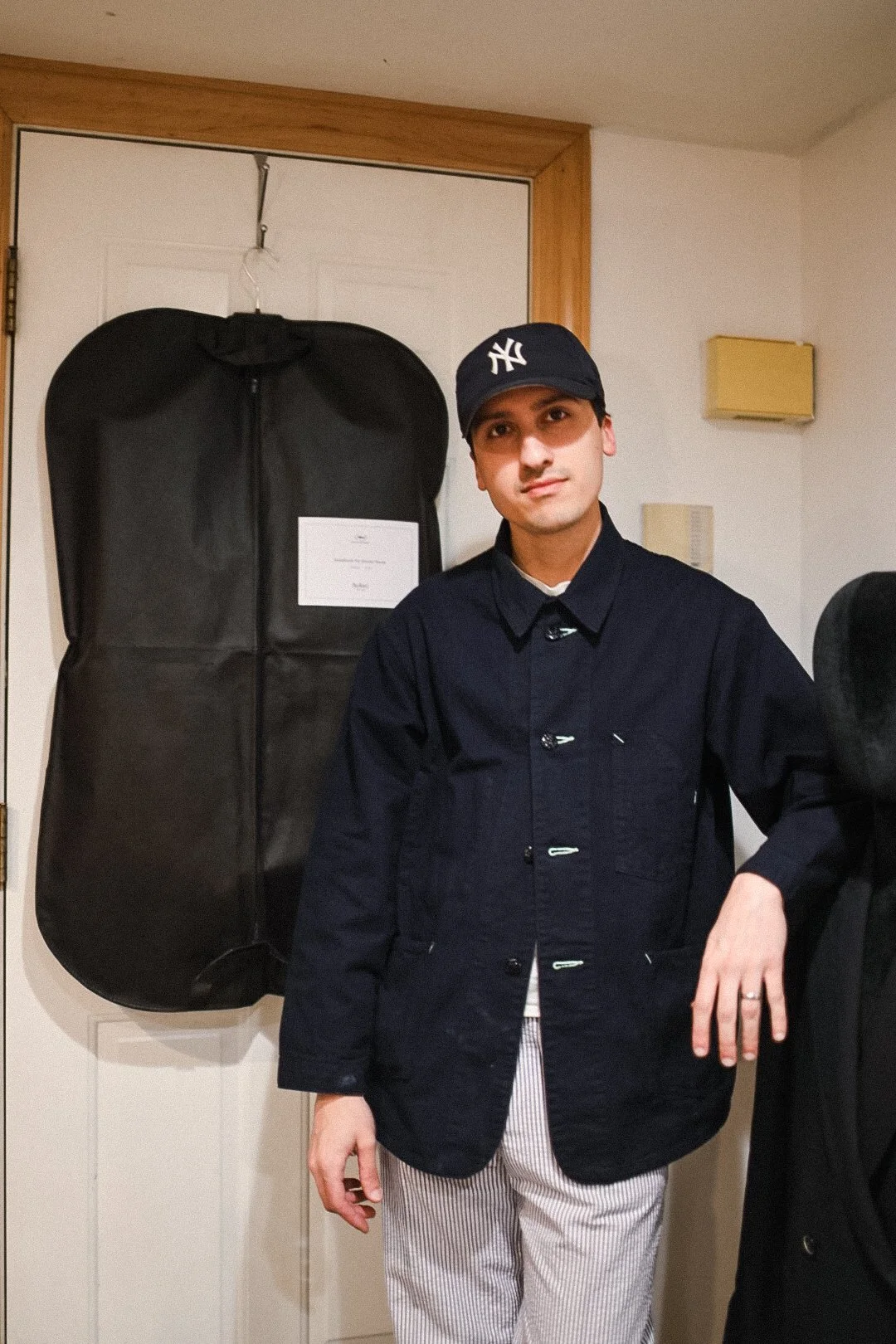
Final Fitting, [ko’lōn] Atelier
The following notes outline the construction and adjustments made prior to completion.
Materials
3‑ply tropical wool forms the body of the garment, chosen for its balance between structure and breathability.
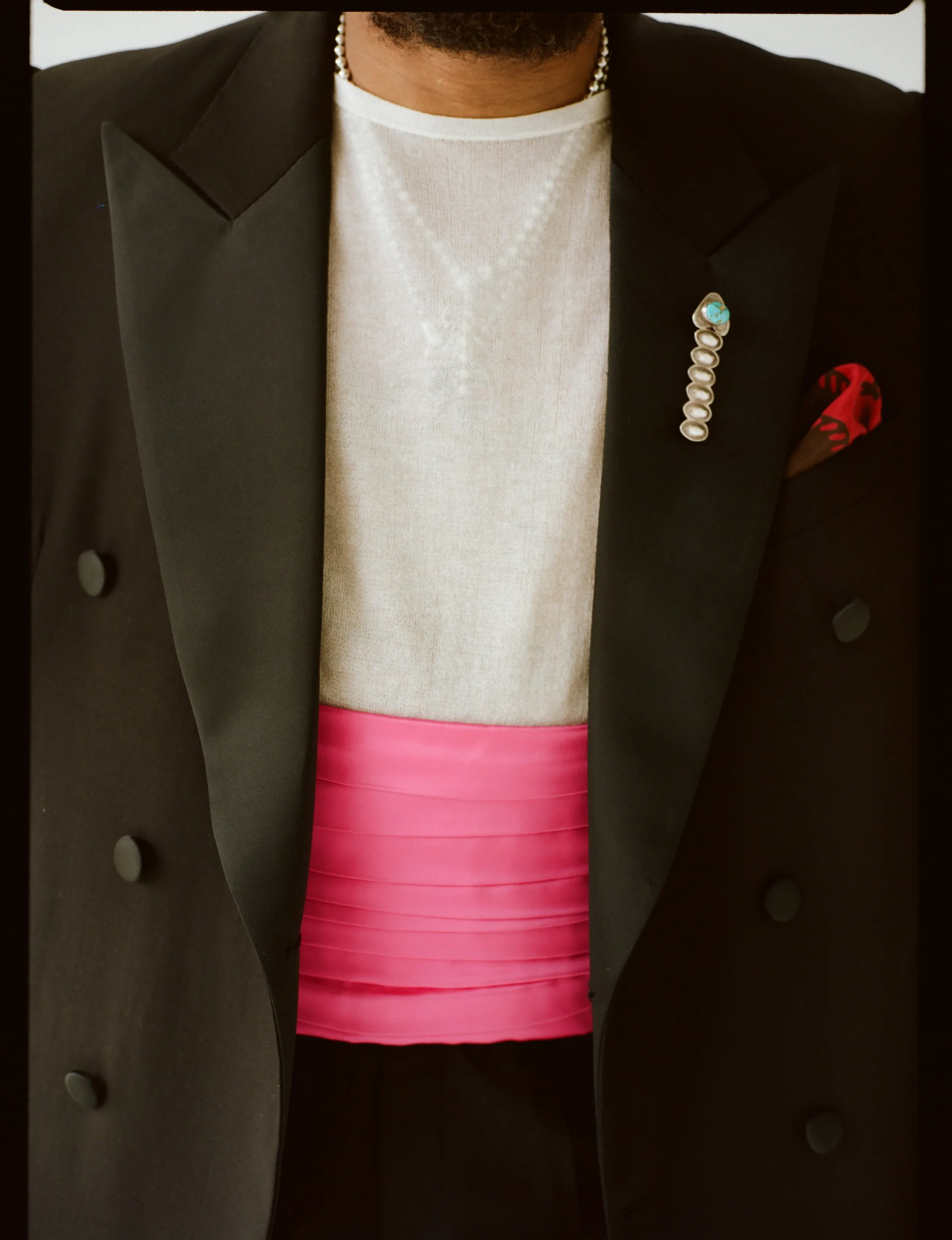
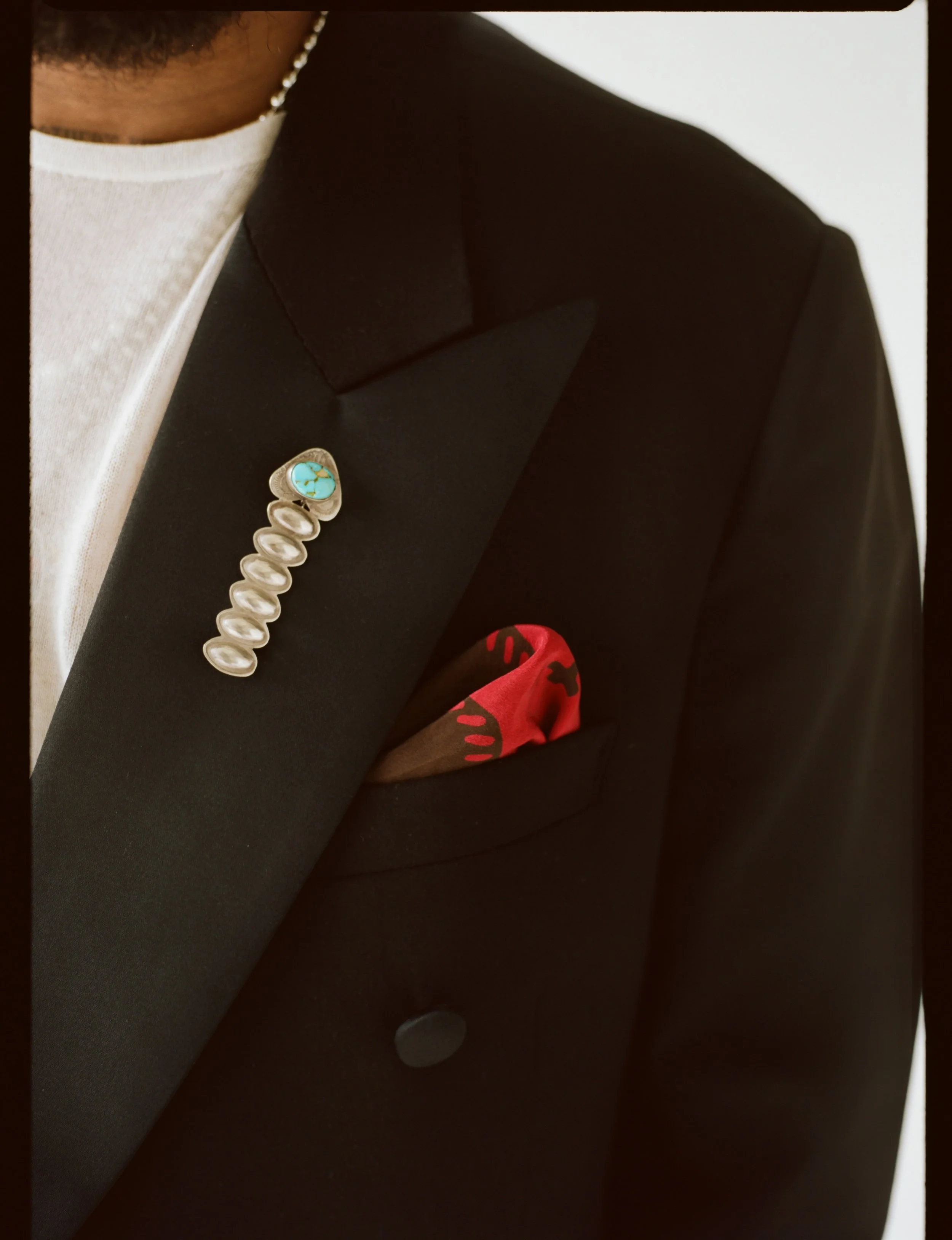
Heavy-backed duchesse silk satin defines the lapels and trouser stripe, introducing contrast through both texture and weight.
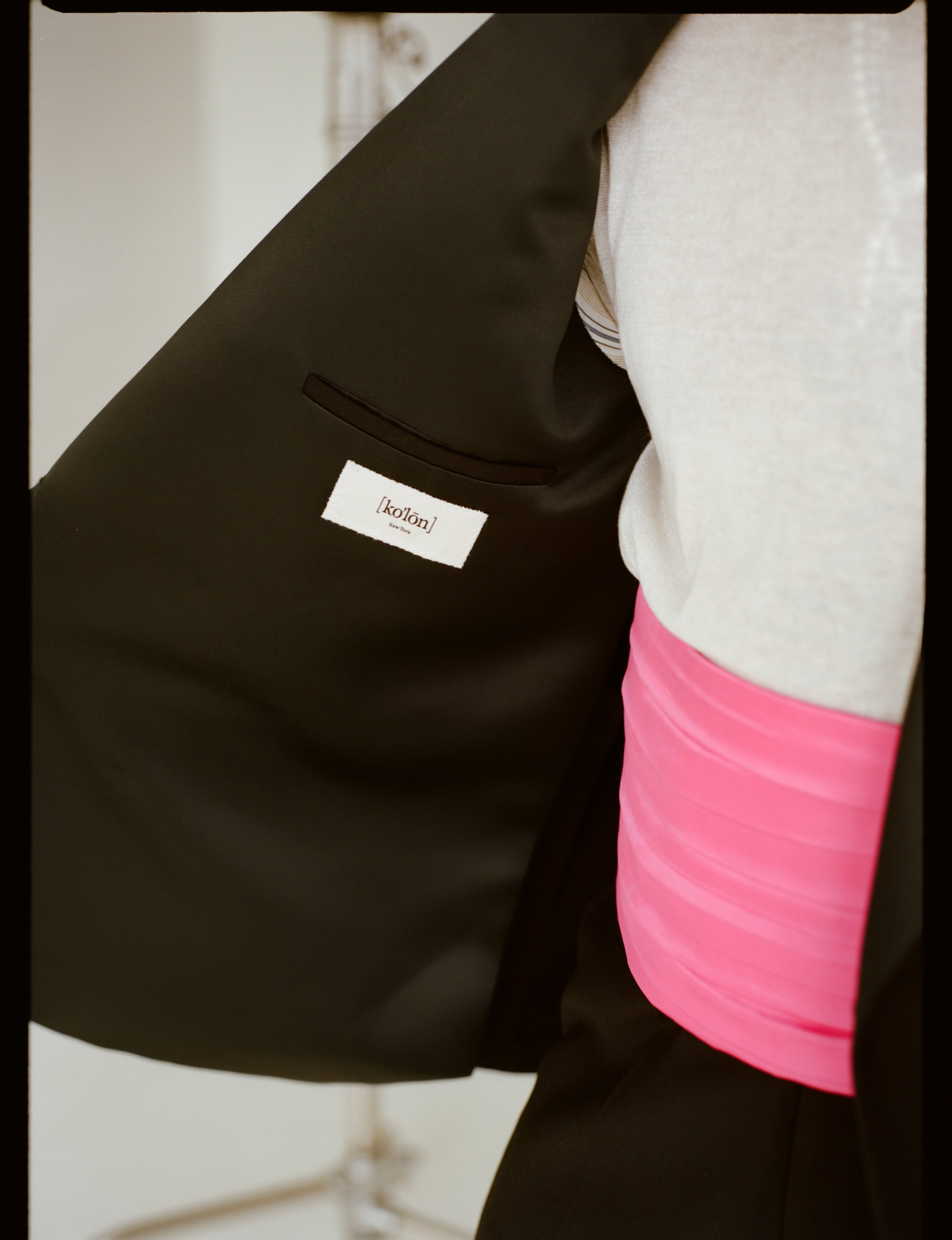
The interior is finished in Japanese Bemberg, allowing the garment to lay cleanly against the body.
Construction time
The jacket is constructed over approximately 50 hours.
The trousers require an additional 10.
Time is distributed across cutting, construction, and hand finishing.
Execution
Jacket:
A double-breasted construction with silk lapels and a full floating canvas.
The body is lengthened, with double vents allowing for a more formal silhouette.
The interior is partially lined, with finishing completed by hand, including hand pressed silk-covered buttons.
Trousers:
Cut with a high rise and a traditional flat front design.
The front is half-lined, with a silk side stripe running the length of the leg.
The waistband is fully canvased, finished with hook-and-bar closure, a rubber-gripped waistband curtain, and an enamel fish-eye button.
Pattern
Jacket:
Pattern developed from the original Brooklyn Tuxedo.
Adjusted through length and lapel shape, with a fuller peak and a more tailored fit through the body.
Trousers:
Based on an 1870s denim jean pattern.
Reworked for formal use, retaining elements such as the removal of the back darts and a single back pocket.
Features include a waistband extension, front slant pockets, a single back pocket with a western-style flap, and side tab adjusters.
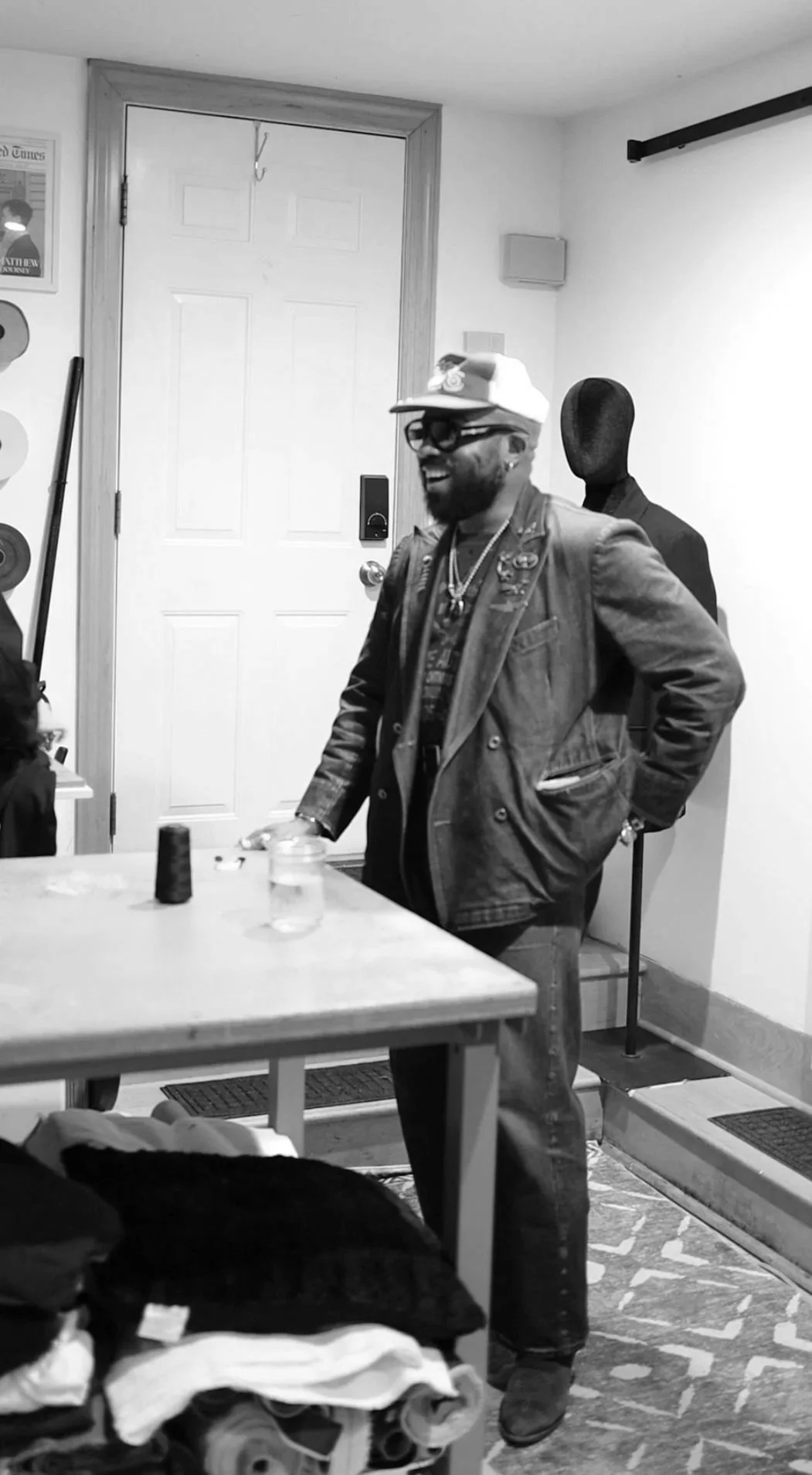
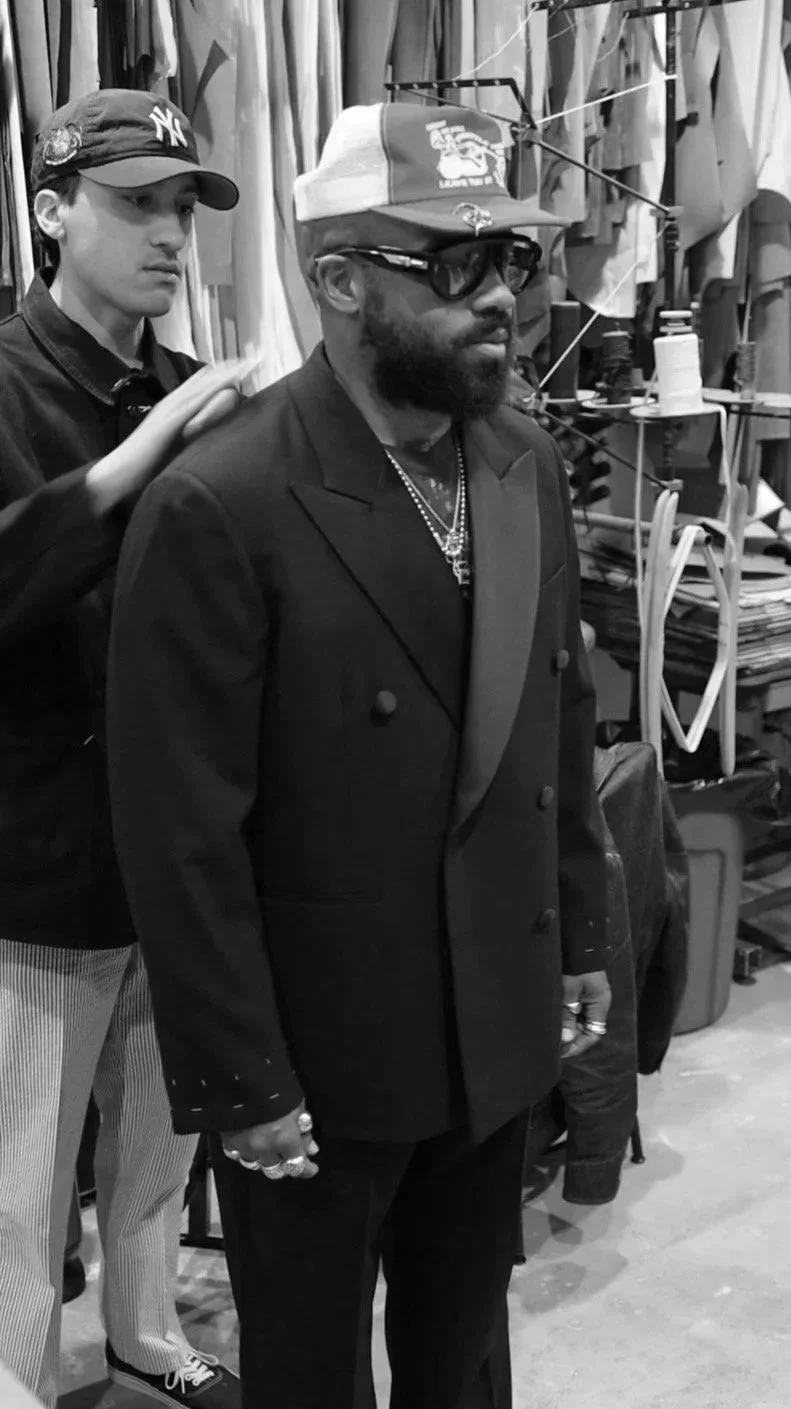
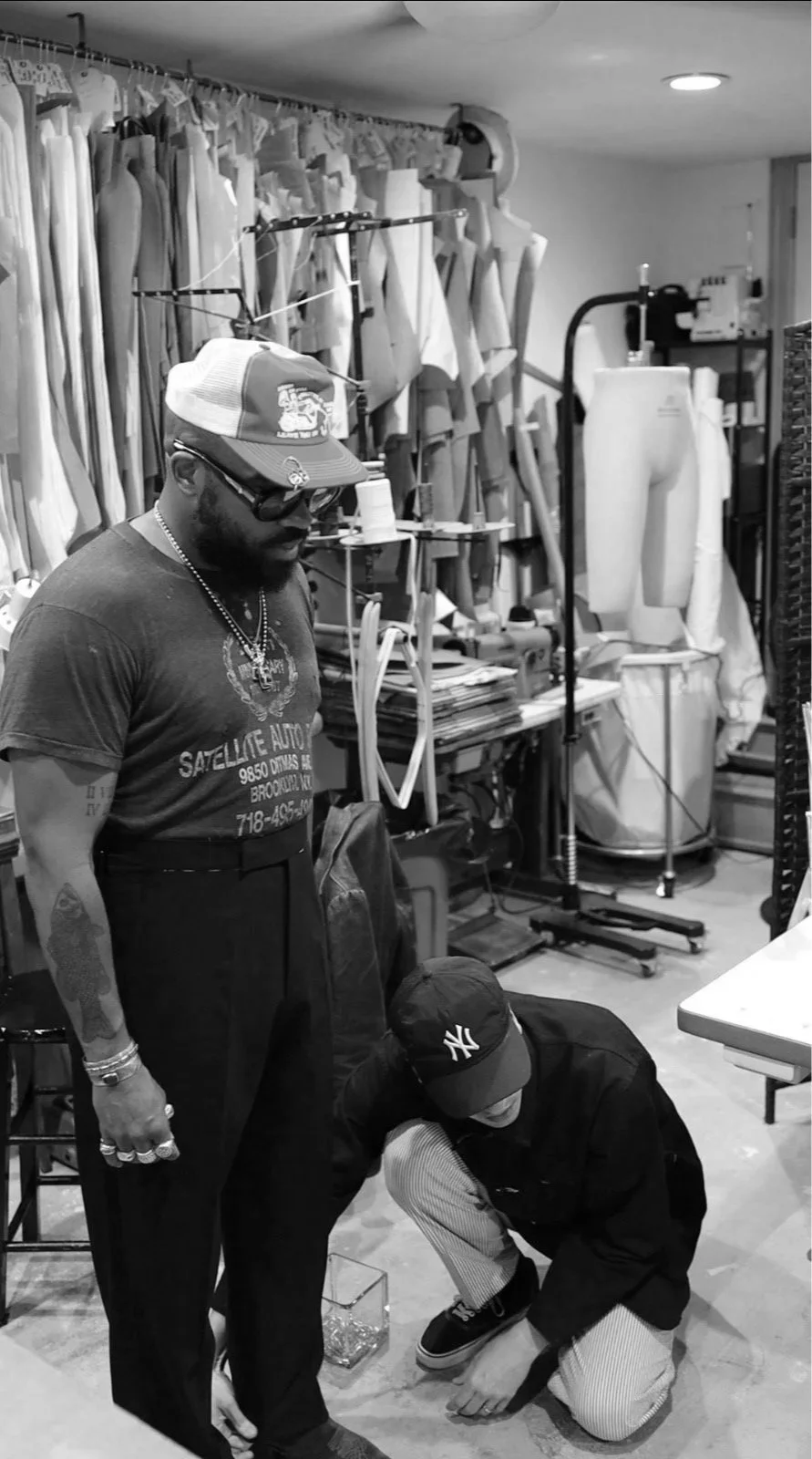
The garment is brought into its near complete form, and I watch as Matthew begins the final fitting with Hassan.
At first, nothing is adjusted.
Matthew steps back and observes the garment as it sits on Hassan’s body—how the jacket rests at the shoulder, how it falls through the front, how the length resolves at the hip. The focus is quiet, taking in what is already there before anything is changed.
Then the adjustments begin.
Matthew steps in and begins adjusting the fit directly on Hassan., moving through the jacket with small corrections—refining the shoulder, shifting the front balance, checking how the body hangs. At the same time, the trousers are marked: the waist, the rise, the break, the line through the leg. Pins are placed carefully, each one holding a final decision.
Next step it’s about the proportion. How the jacket meets the trousers, how everything works together as one piece rather than separate parts.
As Hassan begins to move, and the garment is observed in use, turning, shifts position, and even walking while Matthew watches closely. The garment is no longer still, it reacts, and the adjustments that follow come from movement not just a still garment.
The suit is removed briefly.
Matthew checks the marked areas, the structure that supports what is seen on the outside. Notes are made before the final stitching. Then the final touches are made. the garment is pressed and prepared to travel to France.
At this stage, very little changes. What remains is confirmation. The garment settles, holding its shape on Hassan the way it was intended.